Understand the material on the paper
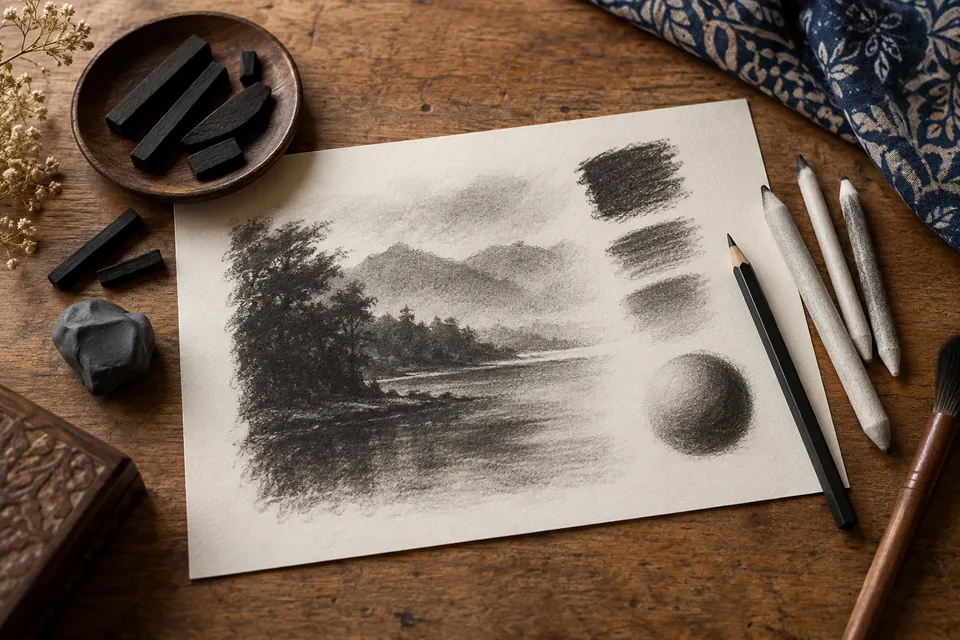
Graphite pencils contain graphite in different grades. Charcoal comes in forms such as sticks, compressed charcoal, pencils and powder. Their handling, darkness and ease of lifting differ.
Compare control and the finished surface
Graphite can support controlled fine marks and gradual values. Charcoal can establish broad dark areas quickly and remain expressive. Neither material is automatically better; choose according to the question you want to practise.
Make paper part of the comparison
Use paper suited to each medium and test its tooth. A surface that holds charcoal well may behave differently with fine graphite work. Avoid judging a material from an unsuitable or damaged sheet.
A comparison exercise: an egg on folded paper
Draw the same egg twice under one light source, once in each medium. Keep the size and time similar. Compare shadow depth, highlights, edges and the corrections you could make.
Control charcoal without losing its energy
Begin with broad value shapes and lift lights deliberately. Work lightly before adding compressed darks. Avoid rubbing every area into the same soft texture, and keep loose dust away from the drawing surface.
Use graphite's gradual range
Layer light marks and test pressure before darkening. Preserve the paper's lighter areas. Compare pencil grades and mark direction instead of relying only on blending.
Choose according to your learning goal
For precise small tonal studies, graphite may be a convenient starting point. For broad value masses and dramatic darks, try charcoal. Review the curriculum to see how each course uses its medium.
Protect the study appropriately
Keep finished work from rubbing against other surfaces. Follow the material manufacturer's advice if using a fixative, including ventilation and test application. Storage and handling should suit the medium.
References and further reading
The academy's practice suggestions are its own. A reference does not imply endorsement of the academy or its courses.

