
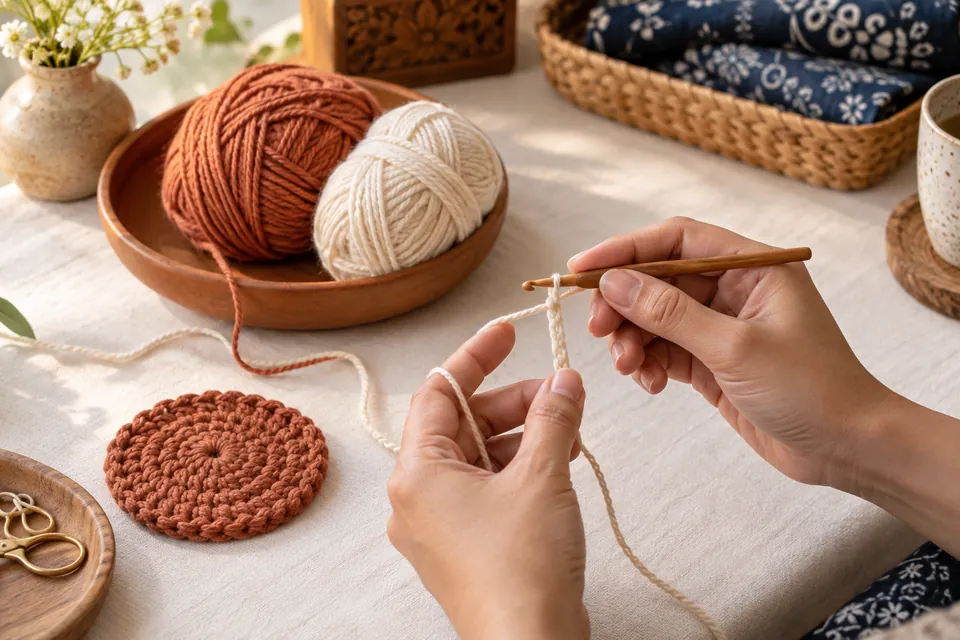
Choose yarn and a hook
Use a smooth yarn in a light or medium colour so that stitches remain visible. Choose a compatible hook according to the yarn information and test how it feels in your hands.
Understand the stitch before speeding up
Watch where the hook enters, how the yarn is caught and which loops remain on the hook. Work slowly enough to recognise each stage. Speed follows control.
Make a short test sample
Practise holding the yarn and hook without gripping tightly. Compare loose and tight stitches. Change one aspect of your hand movement at a time rather than changing every tool at once.
Begin with a chain of 16
Use a short foundation chain for a manageable practice square. Follow the demonstrated convention for starting the first row and turning. Count carefully and keep the first and last stitches visible.
Repeat rows with consistent edges
Count stitches as you work and check the edges after each row. A marker can help identify a turning point. Correct an accidental extra or missed stitch before it changes several later rows.
Why does the work widen, narrow or curl?
Changes can come from stitch count, missed edge stitches, added stitches or uneven tension. Compare the sample row by row. Identify the cause before simply using a larger hook.
When does gauge matter?
Gauge becomes especially useful when a project's size must match a pattern. Measure a prepared sample using the pattern's instructions rather than assuming that the same hook always produces the same size.
Keep useful notes
Record the yarn, hook, stitch count and one thing you changed. Keep a small sample if practical. These notes help you resume without repeating the same trial-and-error process.
References and further reading
The academy's practice suggestions are its own. A reference does not imply endorsement of the academy or its courses.
