Choose one teaching model
Arabic scripts have different letter structures and proportions. Begin with a consistent Naskh model rather than combining unrelated examples. Keep the reference visible while practising.
Prepare controllable tools
Use a calligraphy pen and paper suited to the exercise. Test the ink flow and surface first. A predictable tool makes it easier to distinguish a construction problem from a handling problem.
Understand the nib's effect
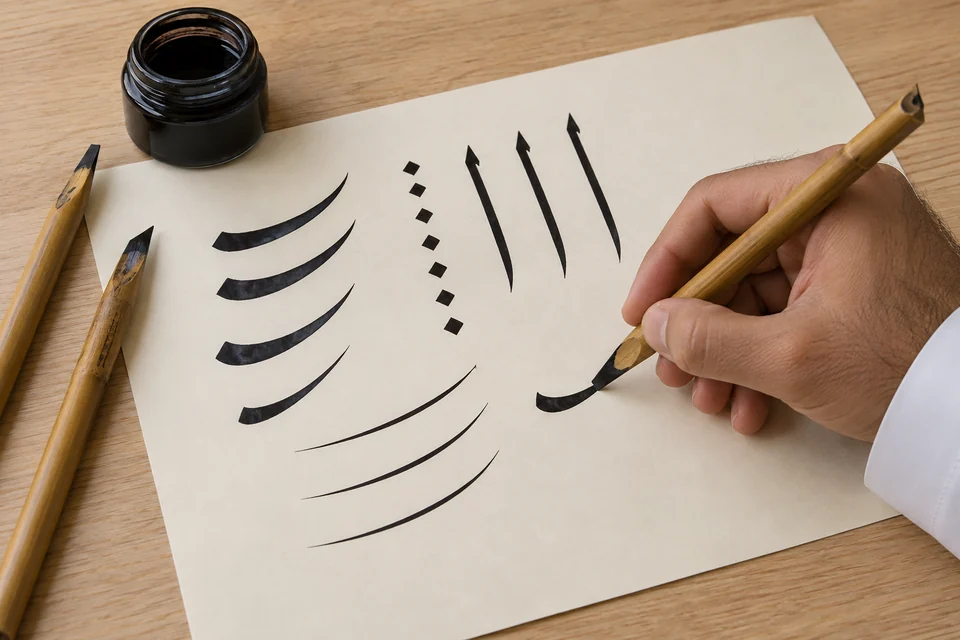
Observe how pen angle and movement change stroke width. Practise short marks before writing full letters. Keep your setup consistent while learning a new letter group.
Use the dot as a measuring unit
The dot helps compare proportions; it is more than decoration. Follow the measurements in your chosen teaching model and compare the whole letter rather than correcting a single point in isolation.
Practise small letter groups
Group letters with related structures. Repeat a small number carefully, mark one specific problem and try again. A page of unreviewed repetition is less useful than a few observed corrections.
Move from isolated letters into words
Compare the letter's isolated form with its position and connection in a word. Keep baseline, spacing and joins consistent with the model. Do not assume that joining letters means placing isolated shapes side by side.
A short-line exercise
Write a short phrase, leave room for review and compare letter proportions, joins and spaces. Repeat the line with one correction in mind. Keep the earlier version to see the effect.
Correct the source of difficulty
If a letter repeatedly fails, return to its main stroke and pen movement. Check angle, scale and spacing before writing another full line. Build consistency gradually.
References and further reading
The academy's practice suggestions are its own. A reference does not imply endorsement of the academy or its courses.
