
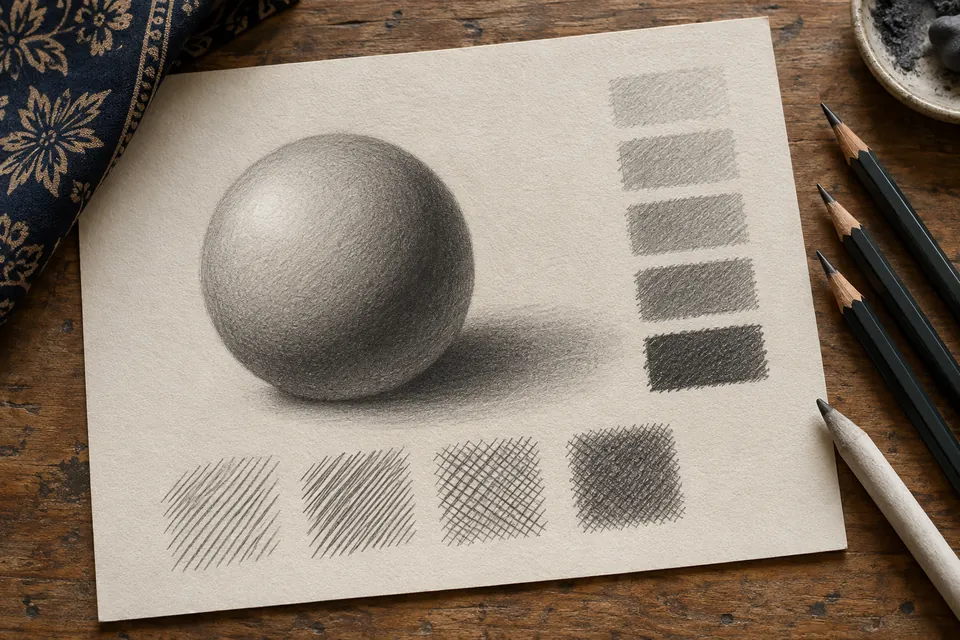
Use a scene with readable light
Place a matte light-coloured ball or egg on a table with one light source. Keep its position fixed. Identify the lit side, the form shadow and the cast shadow before making marks.
Explore a few pencils and your pressure
Try a small selection of graphite grades on the same paper. Build darker values gradually rather than pressing hard at the start. Notice how the point, paper texture and hand pressure affect the mark.
Make a five-value scale
Draw five adjoining areas from light to dark. Keep each value visibly distinct and reasonably even. This scale becomes a reference for deciding whether a shadow is actually dark enough in your drawing.
Recognise the light and shadow regions
Look for the highlight, lit area, transition, form shadow and reflected light. Compare them rather than assuming that every edge needs a dark outline. The cast shadow has its own shape and changes in edge quality.
Develop a sphere study in stages
Sketch the shape lightly, map the large shadow and establish a middle value. Deepen the darkest areas gradually, preserve highlights and review the overall value relationships before refining small changes.
Blend to describe form
Use blending where it helps a gradual transition. Keep useful edges and avoid spreading graphite into every light area. Test the tool on scrap paper before touching the study.
Diagnose a flat or muddy drawing
Check whether the value range is too narrow, the light source has changed or the light areas have been contaminated. Correct the underlying value relationships before adding more detail.
Transfer the observation to another object
Repeat the exercise with a cup or a piece of fruit. The subject changes, but the questions remain: where is the light, which values belong together and which edges need emphasis?
References and further reading
The academy's practice suggestions are its own. A reference does not imply endorsement of the academy or its courses.

