
What you will learn
- Trace a pale branch by following the blue on either side.
- Compare the scale of a specimen with the margin around it.
- Distinguish the algae publication from the flowering-plant album.
How a specimen leaves a pale shape
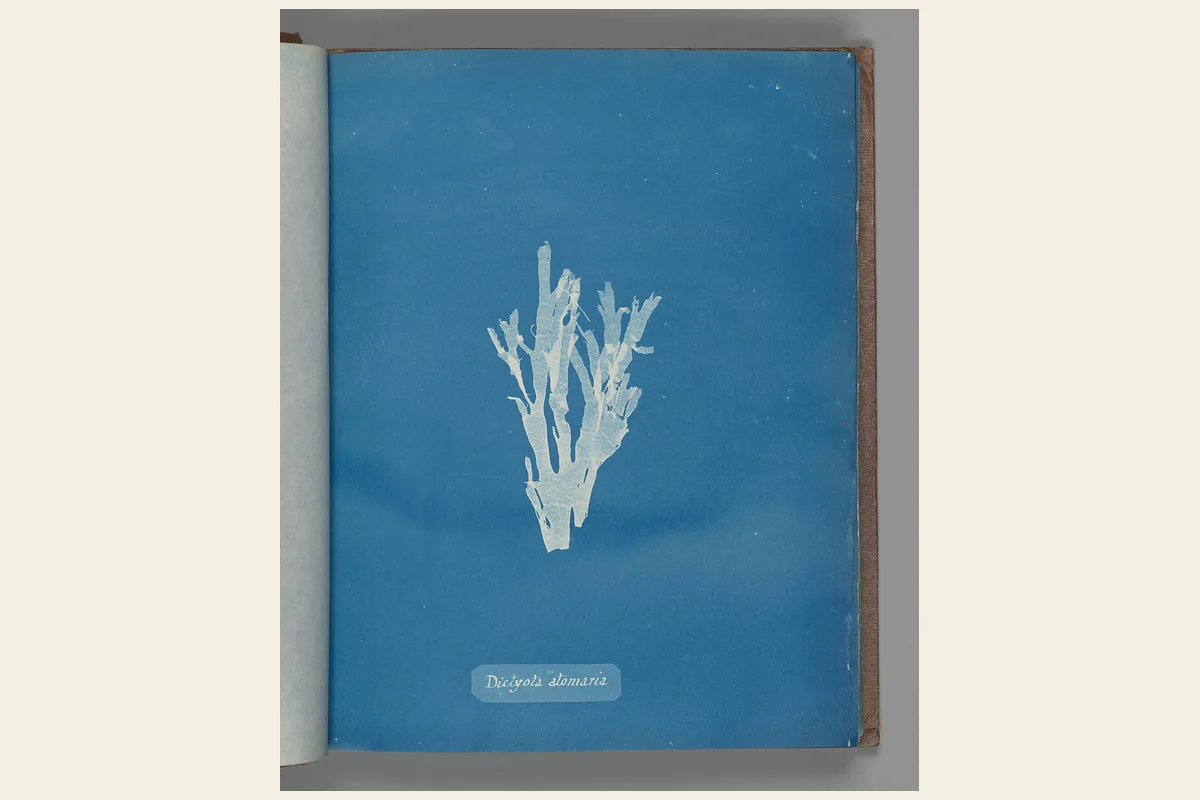
John Herschel devised the cyanotype process in 1842. The Met describes Atkins laying wet algae on sensitized paper and placing the assembly in sunlight. Areas receiving light become blue in the finished print. A part shielded by the specimen stays paler. Picture a fork with a narrow gap between its arms. Light entering that gap makes the thin blue wedge that lets you read the fork. The Met · Photographs of British Algae
A photograph beside a name
Atkins began issuing her book on British algae in parts in 1843. She followed the naming scheme in William Harvey’s 1841 manual and lettered the plates by hand. Giving a reader both a name and an impression made comparison possible. Try looking at the specimen before reading the label. Pick one feature that you would remember if you were looking for the same form on another sheet. The Met · Photographs of British Algae
Follow one branch through Dictyota
The Met dates this print of Dictyota atomaria to about 1853. The little upright specimen takes up only a fraction of the blue field, with its label beneath it. Start at an outer tip and work down towards the base. In one stretch you can follow two distinct edges. Farther in, pale branches overlap. Where the blue runs out, it becomes harder to decide which branch continues. The Met · Dictyota atomaria
A different scale in the flowering-plant album
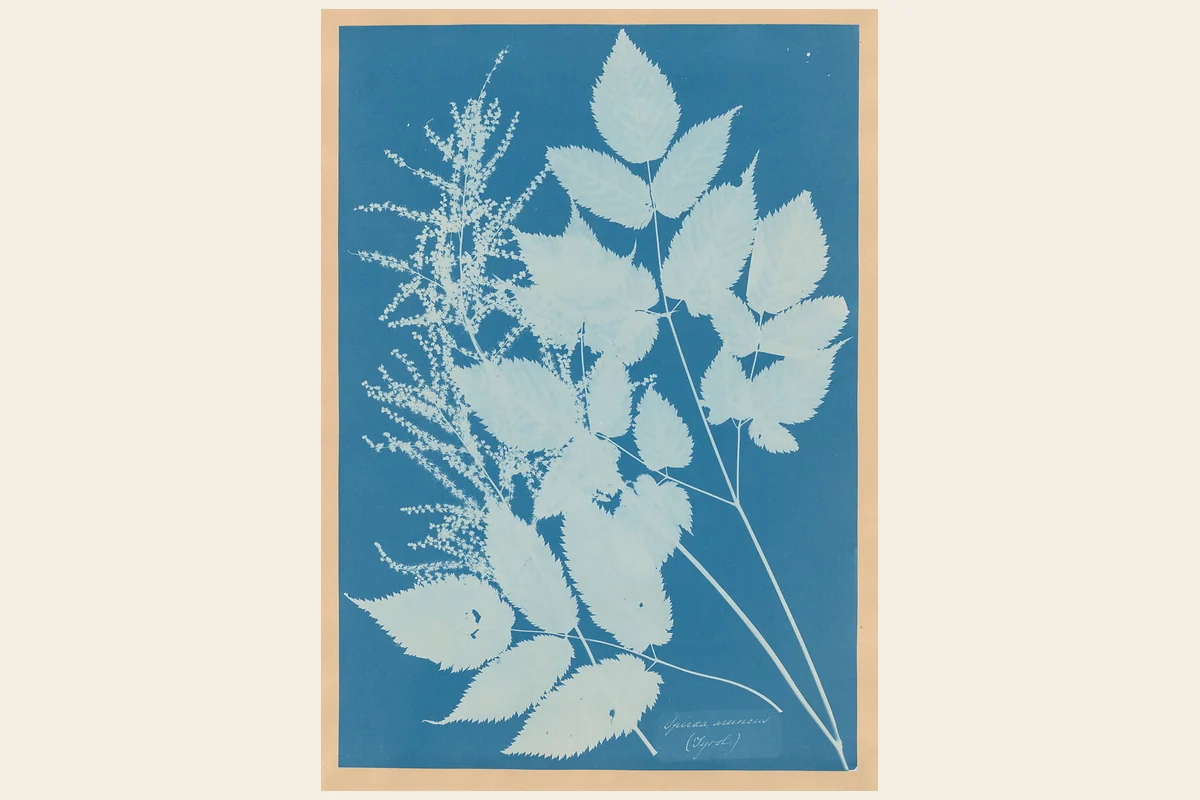
Spiraea aruncus (Tyrol), dated 1851–54, spreads across its sheet. Broad toothed leaves fill the right side. A finer spray occupies the left. This page belonged to a flowering-plant album that Atkins dedicated to her friend and collaborator Anne Dixon in 1854. Compare a blue opening between broad leaves with one between the fine shoots. Your eye shifts scale without leaving the page. The Met · Spiraea aruncus (Tyrol)
What survives the contact print?
You can describe the serration of a leaf, count some branch divisions and locate an overlap. The original colour of a living leaf cannot be recovered from those tonal differences alone. If a tip fades, describe the fading first. Its translucency or its position against the sheet could matter. A single pale mark offers little basis for choosing between those explanations.
Make a paper comparison
Cut two pale paper leaves with stems. Lay them on a blue sheet, first with a gap between them, then with one leaf laid across the other. Step back and sketch one blue opening in each arrangement. Which version lets you follow the stem farther? Return to the botanical prints and find a small opening doing the same work. You have tested a compositional choice with ordinary paper.
Frequently asked questions
Did Atkins use a camera for these botanical prints?
She made these images by contact with sensitized paper. Photogram describes the way the object forms the image. Cyanotype names the photographic process that produces the blue print.
Were both images part of the British algae publication?
The Dictyota specimen is an alga. The flowering study Spiraea aruncus comes from a separate presentation album given to Anne Dixon.
Continue learning with the academy
Choose a course for the skill you want to develop, and check its curriculum and lesson language on the course page.
- Digital Drawing with Clip Studio Paint — To develop the silhouette exercise in digital drawing, put the background and stems on separate layers, move one shape, and compare the gaps that remain.
