
What you will learn
- Imagine the size of the floor before enlarging its details.
- Follow a border at a distance and a cheek at close range.
- Keep the visible flowers distinct from competing accounts of what the figure represents.
Stand at the edge of the room
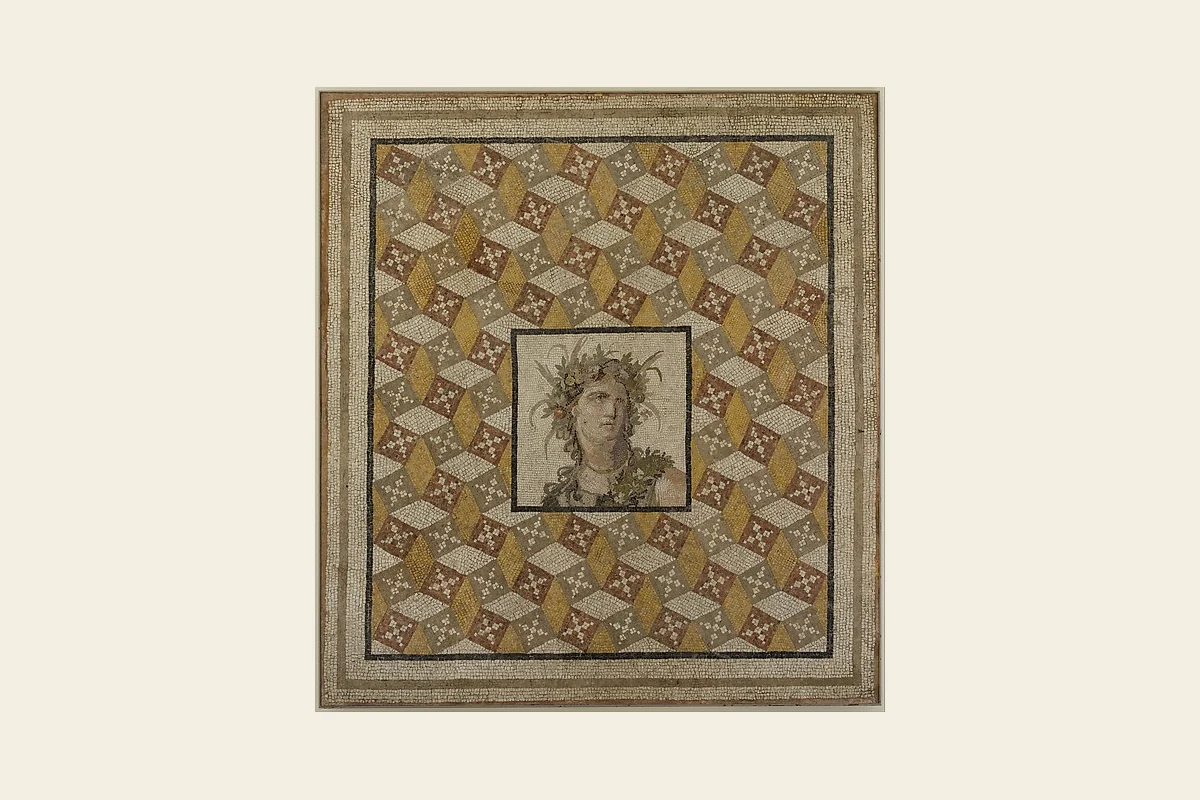
This second-century CE pavement came to light in 1937 at Daphne near Antioch. Its decorated rectangle spans more than two metres in either direction. Stretch out your arms and imagine a floor larger still. At a glance you could take in the composition. To inspect a few stones at the far edge you would have to move. The Met, the Daphne pavement and its central figure
Try a visitor’s first glance
Reduce the photograph to postcard size. The eye sockets recede but the dark frame around the bust remains distinct. Follow one of the light diagonal shapes outside it, then look for the next. The museum suggests the pavement may have occupied the approach to a villa courtyard. If so, visitors would have seen the pattern expand and change shape as they moved across it. The Met, the Daphne pavement and its central figure
Find the units inside a cheek
Mosaic makers set small pieces, called tesserae, in a bed that held them in position. The recorded materials here include stone, tile and glass. Enlarge the portrait until you can follow the shift from a lit cheek towards the shadow below. Reduce it again. The small jumps in colour now read as a turn in the face. The Met, the Daphne pavement and its central figure · The Met, Roman Art: A Resource for Educators
Look under the image
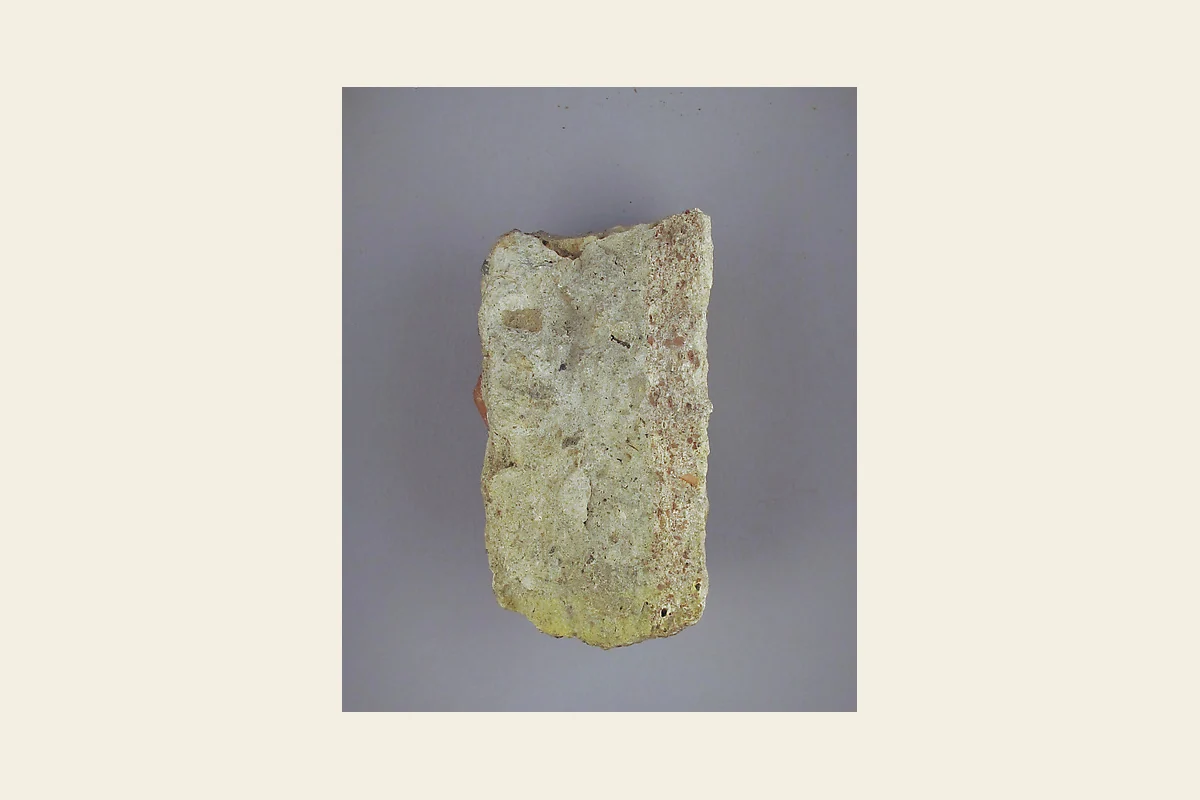
The separate object pictured here preserves tile and mortar in a piece of Roman floor bedding about fourteen centimetres long. Its uneven surface suggests how much physical substance a flat-looking picture can contain. It has its own collection record and no documented connection there to the Daphne floor. Use it as a material comparison. The Met, a surviving piece of Roman mosaic bedding
Name what the flowers tell you
A wreath sits on the woman's head and a garland falls over one shoulder. Those details once encouraged an identification with Spring. The museum favours a broader personification of abundance and comfortable living. Try writing a label in two sentences. In the first, describe the flowers in terms a visitor could check. In the second, explain why either interpretation might have seemed plausible. The Met, the Daphne pavement and its central figure
Change one border
Cut small pieces from pale, mid-tone and dark paper. Make a few diagonal repeats around a plain central square. Photograph it with a dark frame, then replace the frame with a pale one. Shrink the two images to thumbnails. Which allows you to find the centre sooner? Return to Daphne and compare the width of its frame with the size of the head it encloses.
Frequently asked questions
Was this a wall picture?
The museum identifies the panel as the whole decorated area of a floor. A photograph places it directly in front of us. A visitor to the original room would have approached it from above and at an angle.
Were all the coloured pieces marble?
The materials vary from one pavement to another. The museum lists stone, tile and glass for this one. Colour alone is a poor guide to the material of a particular piece in a photograph.
Continue learning with the academy
Choose a course for the skill you want to develop, and check its curriculum and lesson language on the course page.
- Digital Drawing with Clip Studio Paint — A digital drawing tool is handy for the border experiment. Put the frame on a layer of its own so you can switch between two values without rebuilding the pattern.
